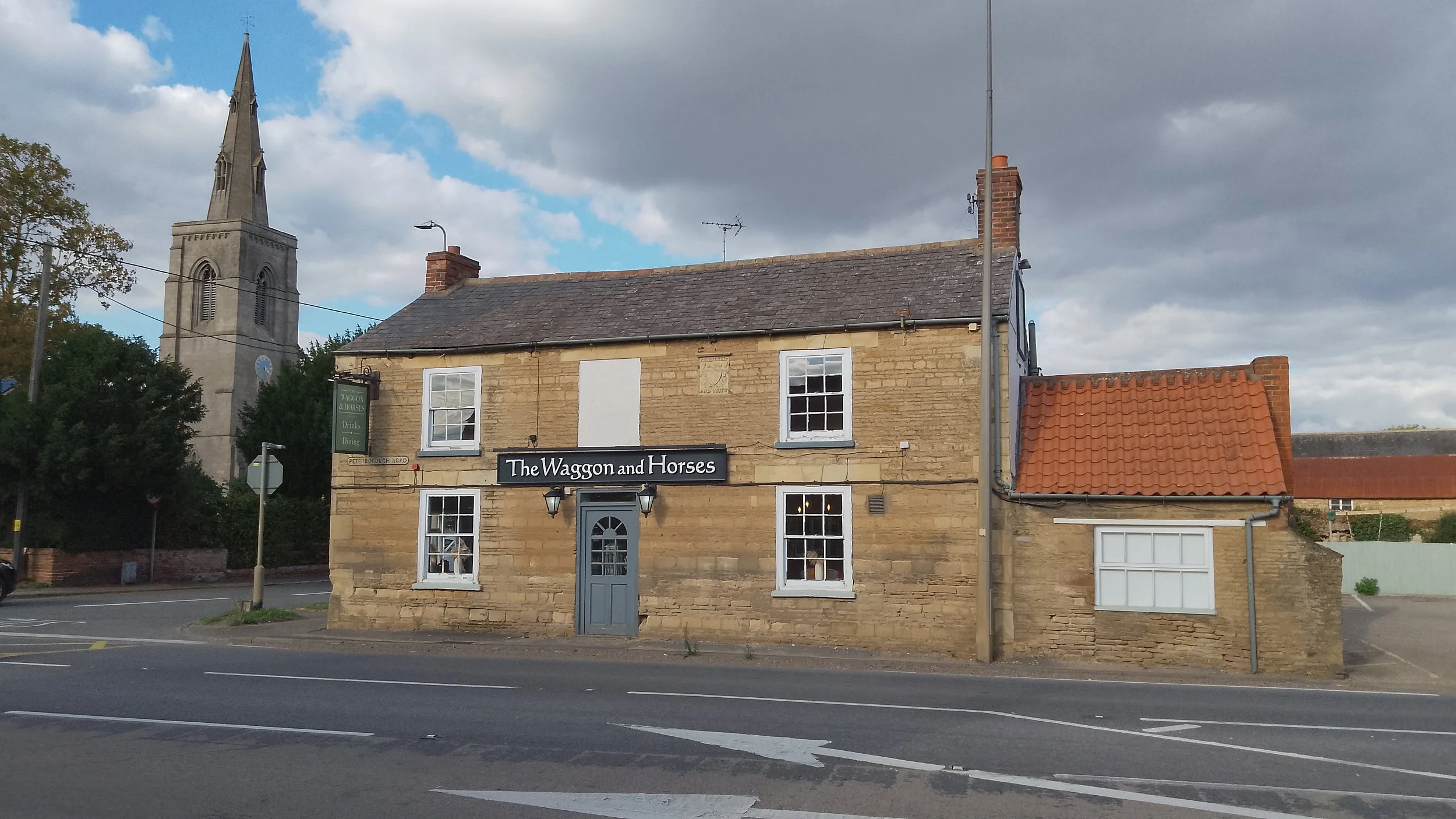
Not only is this familiar pub significant because it is the last survivor of seven pubs in the village of Langtoft, but it is a landmark we all look for as we head up or down the A15. Built in 1831, it was predated by another of the same name on the site. In 1805 Edward Maxom was the licensee; we know this as it was reported that on 12th May a traveller left a black horse with a star on her forehead still with her saddle and bridle at the pub, and it was still there four days later. Edward advertised for the owner to come forward to claim the horse otherwise it would have to be sold to cover his expenses for keeping it! In 1810 an auction was held at the pub before the new building was erected in 1831.
The building was Grade II listed in 1987, built of coursed and banded limestone rubble with ashlar corner stones and dressings, a slate roof and two chimneys. On the first floor a central blank opening is flanked by similar windows; between the right-hand pair of upper windows a square plaque has the date 1831, the initials J.J.M. and an inscription ‘Friendship and Unity’ adorned with pipes, flagon hearts and clasping hands.
The Waggon
& Horses