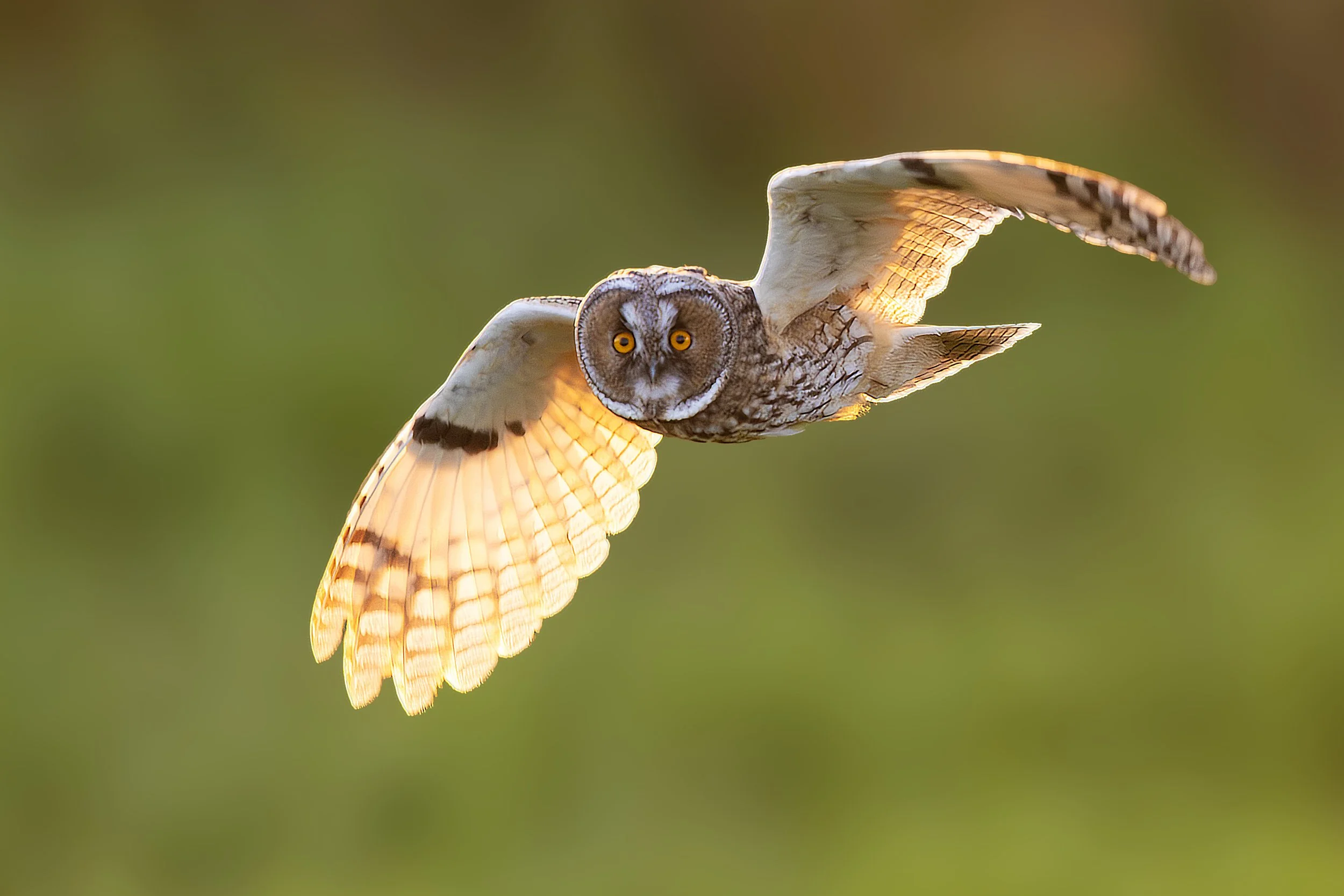
I wasn’t going to have another summer watching our local Long-eared Owls. I had decided I would spend the long, lazy evenings of May and June looking for other birds, maybe other Owls or even Otters. But Long-eared Owls are a bit of a drug to me and when my friend sent a ‘BOC’ (a rather ugly way of saying Back Of Camera shot) of two fluffy juveniles, out on top of a flowering hawthorn, in the middle of the afternoon, I couldn’t resist…
Last summer was dreadful for our local Owls. Barn Owls seemed to do terribly and, judging by how few arrived back in the winter, Short-eared Owls didn’t do much better in their upland breeding strongholds. Broods were small and there was a high mortality rate, suggesting there wasn’t much food about. Indeed, of the two regular Long-eared Owl nests I watch, they fledged just three young between them and the most common prey item I saw them with was rats — suggesting small rodents and shrews weren’t easy to come by.
Early on this spring, local ringers who had visited Barn Owl nests were reporting lots of occupied nests and lots of young too. Signs were encouraging, so it wasn’t a huge surprise to hear about these two young LEOs. By the time I got there, they had moved but it soon became apparent that there were three and we enjoyed their antics as they flopped around the willows.
What A Hoot!
Lots of Long-eared Owls!
Words and Pictures by William Bowell